Introduction: The Nurturer in the Realm of Daily Life
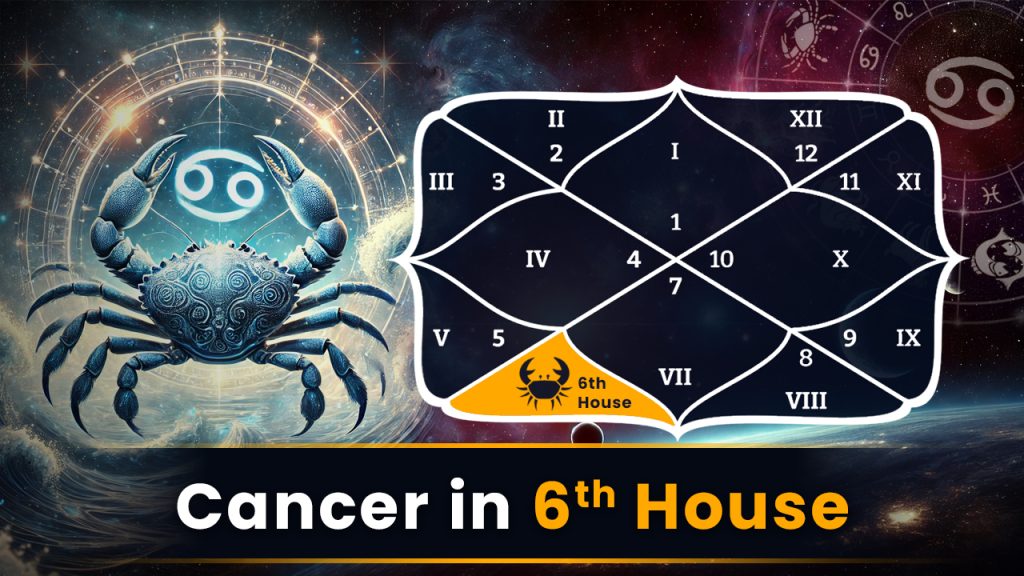
If you’ve ever dabbled in astrology beyond your sun sign horoscope, you know house placements are the unsung heroes of your birth chart: they’re the specific stages where your zodiac signs’ energy plays out in your real, everyday life. Few placements are as quietly powerful as Cancer in 6th House: Work, Health & Emotional Well-Being Insights – a configuration where Cancer’s signature nurturing, emotional sensitivity, and need for security shape every part of your daily grind, from your 9-to-5 to your bedtime routine. The 6th House, traditionally ruled by practical, service-focused Virgo, governs work, physical health, daily habits, and how you show up for others in small, consistent ways. Pair that with Cancer, the cardinal water sign ruled by the Moon, and you get someone who brings heart to every line item on their to-do list, for better and for worse.
Understanding Cancer in the 6th House: Core Meaning & Energy
To get what this placement is all about, think of it as mixing Virgo’s “let’s get this done efficiently” energy with Cancer’s “let’s make sure everyone is okay while we do it” vibe. Cancer is an initiator when it comes to care: they’re the first person to bring soup to a sick friend, or rearrange a group plan to accommodate someone who’s overwhelmed. Drop that instinct into the 6th House, the zone of routine and service, and the central theme becomes clear: you don’t just do your job or follow a wellness routine for the sake of checking boxes. You do it to feel safe, to care for the people around you, and to make your small corner of the world feel warm and welcoming.
Impact on Work & Daily Routine
For folks with this placement, work is never just a paycheck. You show up to serve and nurture, and you actively seek roles where your empathy is an asset, not an afterthought. You also crave emotional security at work: a stable team, a manager who respects your boundaries, and a predictable schedule matter far more to you than a fancy title or a big bonus with strings attached. You’re the coworker who brings homemade cookies for the team on a busy deadline week, who remembers everyone’s kid’s name, and who notices a colleague is burnt out before they even say anything. Your strengths are obvious: you’re fiercely dedicated to your responsibilities, you solve problems intuitively (you can spot a process flaw before it causes a mess, just based on how the team is feeling), and you’ll go to bat for your teammates every time. That said, you’ve got your challenges too: constructive criticism can feel like a personal attack, you’ll quit a toxic job without a backup plan if the environment gets too harsh, and you regularly take on other people’s work stress like it’s your own.
Influence on Physical Health & Habits
If you have Cancer in the 6th House, you’ve probably already noticed that your emotions live in your body first. Mayo Clinic notes that chronic stress often first manifests in digestive symptoms, which makes perfect sense for this placement: Cancer rules the stomach and digestive tract, so your gut is your emotional early warning system. If you’re stuck in a bad job or dealing with unprocessed stress, you’ll likely deal with bloating, stomach aches, or IBS flare-ups long before you even realize you’re burnt out. The good news? You have an incredibly strong intuitive sense of what your body needs. You know exactly when you need to skip the happy hour and go home to rest, and you’re great at nurturing yourself with small, comforting acts like making homemade soup when you’re under the weather. Your biggest health vulnerabilities are stress-induced illnesses and sensitivity to sudden dietary changes, so crash diets or intense, unforgiving workout routines will never work for you. You thrive on gentle, sustainable health habits that feel comforting, not punishing – think a morning walk with your dog and a matcha latte, not a 6am HIIT class that makes you miserable for the rest of the day.
Emotional Well-being & the Mind-Body Connection
For you, emotional stability starts with daily stability. If your routine is chaotic, your work environment is toxic, or you don’t have time to decompress at the end of the day, your mental health will spiral fast. You’re also an emotional sponge: you absorb the stress and sadness of your coworkers, neighbors, and even random strangers you pass on the street, so you need regular time to clear that energy out. Most importantly, you need a safe, cozy home base to recharge. Coming home to your favorite blanket, a pre-prepared snack, and a quiet space to unwind isn’t a luxury for you – it’s a non-negotiable requirement to function. Skip that downtime, and you’ll find yourself snapping at loved ones, getting sick out of nowhere, or feeling completely drained for no obvious reason.
The Critical Link: Work, Health, and Emotional State
People with this placement are living proof that work, health, and emotional well-being aren’t separate silos – they’re a connected feedback loop. If you’re miserable at work, you’ll start skipping your usual walks, stress-eating takeout, and getting regular stomach aches, which will make you feel even more emotionally depleted, which makes work even harder. On the flip side, when you have a fulfilling job where you get to care for others, you’ll naturally prioritize better self-care, sleep more soundly, have more energy, and feel emotionally stable enough to handle small setbacks without spiraling. The biggest lesson for you is that you can’t fix one area without addressing the others: you can’t meditate your way out of a toxic work environment, and you can’t eat healthy enough to fix unprocessed emotional stress. You have to look at all three as part of one connected system.
Potential Challenges & Growth Opportunities
Your biggest challenges all stem from your natural instinct to put others first: you regularly get overwhelmed by everyone else’s needs, you worry so much about every small twinge or ache that you’ve definitely spiraled into a WebMD hole at 2am convinced you have a rare disease, you struggle to set boundaries, and you’ll skip your own doctor’s appointment to drive a friend to theirs. But those challenges come with huge growth opportunities too. You have a natural gift for healing work, so careers in care, education, or hospitality will feel far more fulfilling than any corporate job that asks you to leave your empathy at the door. You can also develop an incredibly accurate intuitive sense of health for both yourself and the people you love, and you can build small, beautiful daily rituals that make even the most mundane workdays feel warm and purposeful. When you learn to balance caring for others with caring for yourself, you build a level of emotional resilience most people can only dream of.
Practical Insights for Navigating This Placement
For work: Seek out roles that center empathy and care, like nursing, pediatric teaching, social work, hospitality management, personal cheffing, animal rescue, or holistic health coaching. Make your personal workspace feel like a small safe haven: bring a fuzzy blanket, photos of your loved ones, a small potted plant, or a candle to make long days feel more comfortable. Set clear boundaries around after-hours work messages – no answering emails after 7pm, no matter how urgent someone says a request is.
For health: Skip the intense fads and stick to gentle, consistent routines. Meal prep your favorite nourishing comfort foods so you don’t end up stress-eating chips after a long day. The CDC recommends 10 to 15 minutes of stress reduction activity daily, so try a short guided meditation, deep breathing exercises, or a slow stretch break whenever you feel overwhelmed. Do a weekly emotional check-in with yourself before you do your physical health to-do list, to catch stress before it shows up as a stomach ache.
For emotional well-being: Build a strict decompression ritual for after work: change out of your work clothes immediately, make your favorite snack, and sit quietly for 10 minutes before you start on chores or make plans with friends. Journal for 5 minutes every evening to process all the emotions you picked up during the day, so you don’t carry them to bed with you. Practice saying “no” to extra work or favors when you’re already burnt out – your needs matter just as much as everyone else’s.
Frequently Asked Questions (FAQ)
Is Cancer in the 6th House a bad placement for health? Not at all! It just means your physical health is closely tied to your emotional state. You’re actually more in tune with your body’s warning signs than most people, so if you prioritize emotional self-care, you’ll likely have fewer chronic health issues than people who ignore their body’s signals.
What careers are best suited for someone with this placement? Any role that lets you nurture and support others is a great fit. Top picks include nursing, childcare, K-12 education, social work, hospice care, hospitality, event planning, personal training for beginners, holistic health coaching, and animal rescue.
How can I stop taking things so personally at work? First, remind yourself that feedback is about the work, not about you as a person. If you get criticism in a meeting, say “I’ll take a look at that and follow up later” instead of reacting in the moment, so you have time to process without spiraling. Try a quick grounding exercise when you feel upset: name 3 things you can see, 2 you can touch, and 1 you can smell, to pull yourself out of the emotional spiral.
Does this placement mean I will have a weak constitution? No. WebMD notes that stress-related ailments are common for everyone when they’re burnt out – you just notice them earlier than most. If you prioritize regular stress management and gentle self-care, you’ll likely have a very strong, resilient body.
How does this differ from having the Moon in the 6th House? The Moon represents your core emotional identity, so Moon in the 6th House means your entire sense of self-worth is tied to your daily routines and service work. Cancer in the 6th House is specifically about how you express your nurturing energy in your daily life, so the focus is more on how you care for others and yourself in your day-to-day, rather than your core identity being wrapped up in those routines.
Conclusion: Embracing the Nurturing Path of Service
At its core, Cancer in the 6th House is a placement that teaches you life’s most important lessons through the small, everyday stuff: the way you show up for your coworkers, the care you give your body when you’re tired, the boundaries you set to protect your peace. This placement isn’t a curse – it’s a superpower. When you learn to integrate your emotional depth with your daily service and self-care, you have the ability to heal both yourself and the people around you, one small, kind act at a time. When you stop seeing your sensitivity as a flaw and start seeing it as your greatest asset, you’ll build a life that feels secure, purposeful, and deeply, wonderfully cozy.
References & Further Reading
For more detailed breakdowns of birth chart placements, check out Astro.com for free, accurate birth chart calculations, and Cafe Astrology for accessible, jargon-free explanations of sign and house combinations. For deeper study, the classic text The Only Astrology Book You’ll Ever Need by Joanna Martine Woolfolk is a great resource for beginners and intermediate astrology fans alike. If you want a personalized look at how your Cancer in the 6th House placement interacts with the rest of your birth chart, consider booking a reading with a licensed professional astrologer who specializes in psychological or medical astrology.