Introduction: Your Unconventional Financial Blueprint
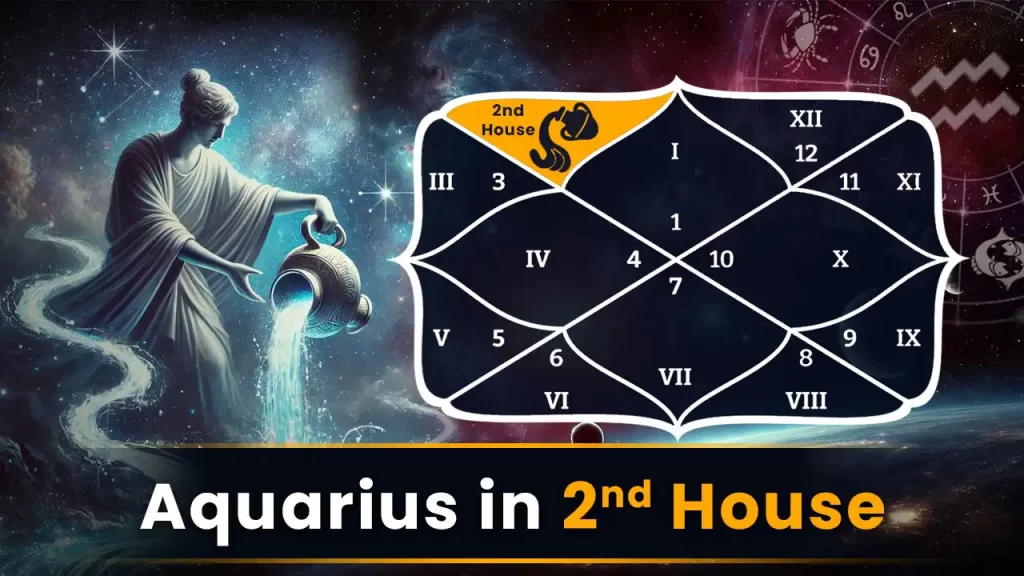
If you’ve ever been side-eyed for ditching a stable corporate job to sell upcycled eco-friendly tech accessories on Etsy, or for putting your stimulus check into a community fridge fund instead of a new TV, there’s a very good chance you have Aquarius in the 2nd House of your birth chart. For anyone new to astrology, your birth chart is split into 12 “houses,” each governing a specific area of your life, from career to relationships to creative expression. The 2nd House rules all things related to money, possessions, core values, and your sense of self-worth, and when the rebellious, forward-thinking sign of Aquarius lands here, you can toss every traditional “rules of money” list you’ve ever read out the window. This placement creates a one-of-a-kind, innovative, and often unapologetically weird approach to earning, spending, and defining what “valuable” even means – and it lines up perfectly with modern shifts away from 9-to-5 grind culture, status-driven spending, and extractive economic systems.
Core Meaning of Aquarius in the 2nd House
First, let’s break down the basics to set the context. The 2nd House is often called the house of personal resources: it doesn’t just cover your bank account balance, it also governs how you feel about security, what you prioritize spending time and money on, and how you measure your own self-worth. Think of it as your internal value system, made tangible through your finances and belongings.
Aquarius energy, meanwhile, is the zodiac’s resident rebel, innovator, and humanitarian. Ruled by unpredictable Uranus (the planet of sudden change and innovation) and traditional co-ruler Saturn (the planet of structure and long-term progress), Aquarius is all about challenging broken systems, prioritizing collective good, celebrating individuality, and leaning into futuristic ideas that most people think are too wild to work. It’s the sign of the startup founder, the community organizer, the indie tech developer, and the person who shows up to a neighborhood meeting with a fully mapped plan to replace all street lights with solar-powered alternatives.
When you combine these two, you get someone whose relationship to money and value is fundamentally uncoupled from mainstream standards. You don’t care about keeping up with the Joneses – you care about building a life that gives you freedom, lets you contribute to something bigger than yourself, and doesn’t force you to play by outdated rules.
Unique & Unconventional Financial Approaches
If you have this placement, your approach to earning money is probably nothing like your parents’ or even your peers’. First, you’re almost certainly drawn to work that breaks tradition: think careers in tech, climate science, digital content creation, social reform, non-profit innovation, or even niche gig work that lets you set your own rules. You’re the person who sees a gap in the market no one else notices – like an app that connects low-income families to free unused tech for remote school – and turns it into a viable income stream.
Your income is also unlikely to follow a standard biweekly paycheck structure. You might have three rotating side hustles, earn money from collective projects like DAOs or community art installations, or get paid in lump sums for contract work rather than a steady salary. Irregular income doesn’t stress you out the way it stresses other people, because you’re used to rolling with change.
You’re also a natural early adopter of modern, alternative financial tools. You were probably experimenting with crypto, crowdfunding, or peer-to-peer lending before your extended family started asking you for Bitcoin advice at holiday dinners, and you’re way more likely to use a neobank than a stuffy traditional national bank that charges $5 ATM fees.
Most importantly, for you, money is never the end goal – it’s a tool for freedom. You’d rather earn $60k a year working 20 hours a week from anywhere in the world than $150k a year tied to a desk 60 hours a week. Wealth accumulation for the sake of wealth accumulation feels pointless to you; financial independence, on the other hand, is your north star.
Spending Habits & Relationship to Possessions
Your spending habits are just as unconventional as your earning style. First, you prioritize spending on things that build future freedom or progress: you’ll drop $1,200 on a coding bootcamp or a high-quality laptop that lets you work remotely without hesitation, but you’ll think three times before buying a $200 designer sweatshirt that serves no practical purpose.
You also spend heavily on your ideals. It’s not unusual for people with this placement to allocate 10% or more of their monthly income to mutual aid funds, environmental nonprofits, community projects, or indie creators building innovative, socially conscious work. You’d rather fund a local teen’s STEM scholarship than buy a new luxury watch, no question.
Most people with this placement also have very little attachment to “stuff.” You’re likely a natural minimalist, you buy secondhand whenever possible, and you view possessions as temporary tools rather than extensions of your identity. That beat-up IKEA couch? It works, so you don’t care that it’s not a fancy Restoration Hardware piece. The 4-year-old phone you have? It still runs the apps you need, so upgrading feels like a waste of money.
There is a flip side, of course: your love of random, exciting new ideas can lead to erratic spending. You might come home from a late-night YouTube deep dive on 3D printing and drop $600 on a starter kit without thinking, only to realize you forgot to budget for groceries that week. You also might undervalue practical necessities sometimes, skipping health insurance for a year because you “don’t get sick” or putting off car repairs because you’d rather spend that money on a community garden project.
Defining Personal Values and Self-Worth
For people with Aquarius in the 2nd House, self-worth is never tied to material possessions. You don’t feel proud when you buy a new car, but you do feel proud when you help organize a successful tenant union in your apartment building, or when you build a free online resource that helps thousands of people learn a new skill. Your pride comes from your individuality, your intellectual authenticity, and your contributions to social progress, not from status symbols.
You also value ideas and knowledge way more than traditional markers of success. You’d trade a $300 fancy tasting menu dinner for a 3-hour conversation with a climate futurist or open-source developer in a heartbeat, and you think people who brag about their luxury bag collections are fundamentally missing the point of what makes life meaningful.
Your sense of value is also deeply collective, not individual. You feel successful when your whole community wins, not just when you get a raise or a promotion. Volunteering, contributing to group projects, and being part of movements fighting for a better future are some of the most meaningful things you can do with your time and money.
Unsurprisingly, you also reject most traditional societal standards of success. The whole “get married at 27, buy a 4-bedroom house in the suburbs, have 2 kids, retire at 65” script feels completely irrelevant to you, and you have no interest in forcing your life to fit that mold just because other people say you should.
Potential Challenges & Growth Areas
For all its superpowers, this placement does come with a few common hurdles to work through. First, financial instability is a frequent risk. If you quit your stable job to launch a zero-waste collective without any savings buffer, or turn down well-paying work because it doesn’t align 100% with your values before you have a safety net, you might end up eating instant noodles for 3 months straight and scrambling to pay rent.
You also probably hate pragmatic budgeting with a passion. The idea of tracking every coffee purchase and allocating every dollar to a predefined category feels suffocating, so you might put off long-term financial planning entirely, forgetting to save for retirement or an emergency fund for years.
Another common challenge is undervaluing your own work and practical needs. You might undercharge for your freelance services because you care more about the mission of the project than getting paid fairly, or skip necessary doctor’s appointments because you’d rather spend that money on a community cause. Your focus on abstract ideals can make you forget that you have real, tangible needs that require resources to meet.
The core growth area for this placement is learning to bridge the gap between your visionary ideas and tangible reality. You don’t have to choose between being innovative and being stable – you just have to build systems that work for your unique needs, rather than forcing yourself to follow traditional financial rules that feel like a prison.
Maximizing the Potential of This Placement
This placement is full of superpowers, if you know how to lean into them. First, leverage your innovative edge: you see gaps in markets and community needs that no one else notices, so turn those insights into income. The next big emerging field – whether it’s green tech, accessibility tools, or decentralized community platforms – was made for people like you.
Second, build structure that supports your freedom, rather than restricting it. If rigid monthly budgets make you want to scream, use auto-save tools that move a percentage of every paycheck into savings and retirement accounts without you having to think about it. Schedule just one hour a month to review your finances, so you don’t have to stress about it day-to-day.
Third, align your income with your mission. You’ll never be happy working a high-paying job for a company that harms people or the planet, so seek out work that lets you contribute to the causes you care about. Even if it pays a little less at first, the sense of purpose will be worth it, and your natural innovation will help you grow your income over time.
Fourth, partner with more grounded people to turn your ideas into reality. Team up with a Taurus or Virgo friend who loves spreadsheets, or hire a financial planner who specializes in working with freelancers and mission-driven entrepreneurs. They’ll help you turn your wild, world-changing idea into a stable, profitable project that actually lasts.
Finally, use your resources to invest in the future – both your own, and the collective’s. Put money into education for yourself, green energy projects for your community, or youth programs that teach kids STEM and creative skills. That’s the kind of investment that will give you returns far bigger than any stock market gain.
Aquarius in the 2nd House: Frequently Asked Questions (FAQ)
Q: Does this placement mean I will be poor or unstable with money?
A: Not at all! It just means your path to financial security will be unconventional. Plenty of people with this placement build extremely successful, stable incomes in emerging fields like tech, social innovation, and digital content – they just don’t follow the traditional 40-year corporate climb path. Stability comes from building systems that honor your need for freedom and innovation, not from forcing yourself to follow rules that don’t fit you.
Q: How can I become more practical with finances?
A: Lean into your love of tech first! Use Aquarius-friendly tools like budgeting apps Mint or YNAB to automate most of your financial tracking, so you don’t have to think about it every day. Schedule just one 60-minute block a month to review your spending and savings goals, so it doesn’t feel like a constant chore. You can even gamify saving for long-term goals to make it feel more fun and innovative.
Q: What careers are best for this placement?
A: Any field that lets you innovate, challenge broken systems, or contribute to collective good! Top picks include tech development, social innovation, community organizing, climate science, astronomy, digital content creation, non-profit leadership, and any role that lets you modernize outdated systems. Avoid rigid, rule-heavy corporate roles that don’t let you experiment or contribute to a bigger mission – you’ll be miserable.
Q: How does this affect my self-esteem?
A: Your self-worth is almost entirely disconnected from what you own, and tied to what you know, what you create, and what you contribute to the collective. That’s a huge superpower! Nurture that by prioritizing work and community projects that let you contribute to positive change, and don’t let anyone make you feel less than because you don’t care about status symbols.
Further Exploration & Authoritative Resources
If you want to dive deeper into this placement, start with The Inner Sky by Steven Forrest, one of the most respected modern astrologers, for a accessible, in-depth breakdown of house placements and sign energy. For exploring alternative economic models that align with Aquarian values, check out Post-Capitalist Futures by Aaron Bastani for ideas on building a more equitable, innovative financial system for everyone.
For more personalized insight, look at the placement of the rulers of Aquarius – Uranus and Saturn – in your birth chart. If Uranus is in your 10th House of career, for example, your unconventional income will be directly tied to your professional path, while Saturn in your 4th House of home might mean you prioritize long-term savings for a stable living space more than other Aquarius 2nd House natives.
For credible astrology education and research, check out the International Society for Astrological Research (ISAR) and the Astrological Association of Great Britain, both leading organizations for ethical, evidence-based astrological study.
Disclaimer: This content is for entertainment and self-reflection purposes only. It is not a substitute for professional financial advice. Always consult a certified financial planner before making major financial decisions.
Conclusion: Embracing Your Financial Originality
Aquarius in the 2nd House isn’t a “flaw” or a “curse” – it’s a superpower that lets you redefine what success, security, and value mean for you, instead of being stuck with the outdated, often harmful standards society hands you. The occasional financial hiccup or budgeting struggle isn’t a failure – it’s a growing pain that helps you build a system that works for your unique, weird, innovative self.
At the end of the day, this placement gives you the rare gift of being able to build a life that’s not just financially stable, but also deeply meaningful. You don’t have to choose between making money and doing good, or between freedom and security. Lean into your originality, prioritize the causes and ideas that matter to you, and you’ll create a relationship to money and value that feels authentic, fulfilling, and totally one of a kind – just like you.