Introduction: The Unconventional Foundation
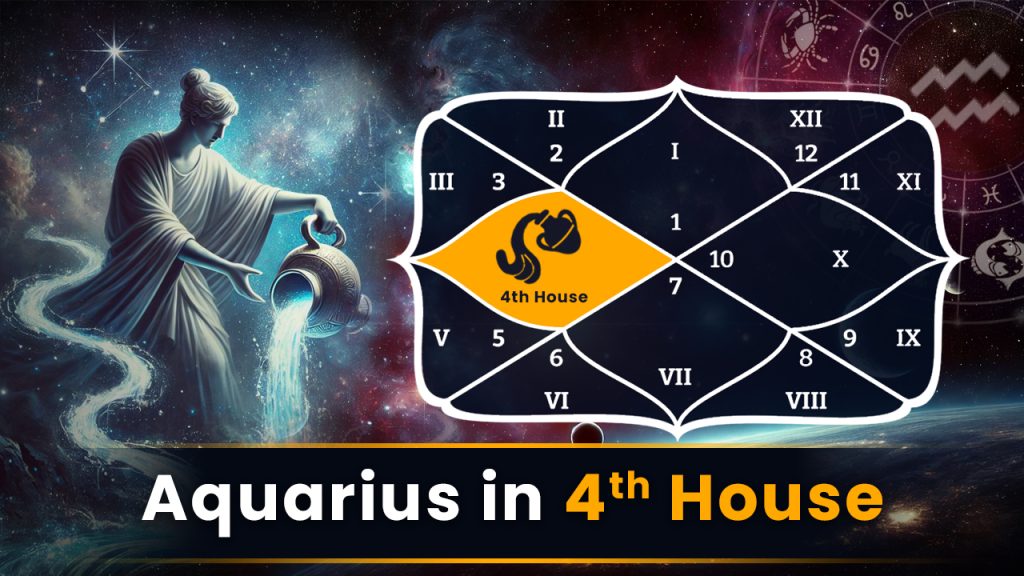
If your idea of a perfect family dinner is a potluck where half the attendees are people you met at the local climate march and no one asks when you’re getting married, or if your apartment doubles as a mutual aid drop-off point and a crash pad for nomadic friends, you just might have Aquarius in your 4th House. To understand what this placement means, let’s break down the basics first.
In astrology, the 4th House is the foundation of your birth chart: it rules your home, childhood roots, family dynamics, and deepest emotional core. As noted by the International Society for Astrological Research (ISAR), it’s one of four angular houses, meaning its energy shapes nearly every part of how you show up in the world, especially when you feel most safe or vulnerable.
Aquarius, meanwhile, is the fixed air sign ruled by Uranus, the planet of innovation, rebellion, and collective progress. Aquarians are known for ditching outdated rules, prioritizing independence, and showing up for their communities—they’re the weirdos, the activists, the people who would rather build something new for everyone than stick to a status quo that leaves people out.
When you mix Aquarian energy with the 4th House’s focus on home and family, you get a placement that completely redefines what “roots” mean. You don’t play by the old, unwritten rules of what a home or family is supposed to look like, and that’s your superpower.
The Aquarian Home: Redefining Your Domestic Space
Forget the picket-fence, 3-bed-2-bath suburban ideal you see in 90s sitcoms: your home is a reflection of your weird, progressive, community-focused values, and you wouldn’t have it any other way.
Non-traditional living environments are par for the course with this placement. You might live in a converted warehouse co-living space, a tiny home off the grid, a van you drive across the country for half the year, or an apartment where every spare room is used for a hobby or community project instead of a formal guest room. Your aesthetic is equal parts eclectic and intentional: thrifted oddball art, upcycled furniture, vertical indoor gardens, and zero matching furniture sets. You’d rather have a home that tells a story than one that looks like it came straight from an IKEA catalog.
Tech and sustainability are also core to your domestic space. You’ve probably got a smart home system set up to track your energy use, solar-powered string lights, a compost bin under your sink, and maybe even a 3D printer in the corner for your DIY repair projects. You love gadgets that make your home more efficient, eco-friendly, and accessible for everyone who visits.
Most importantly, your home is never just for you. It’s a social hub, a community center, a safe space for anyone who needs it. You host monthly repair cafes, queer game nights, and organizing meetings for local mutual aid groups. Your couch is always open to a friend who’s between apartments, and you keep a stock of extra snacks and toiletries for anyone who drops by unannounced (as long as they text first, of course).
Family Dynamics and Childhood Roots
Your upbringing was almost certainly non-traditional, even if you didn’t realize it at the time. Maybe your parents were activists who dragged you to protests as a kid, or you grew up in a blended family with step-siblings, foster kids, and extended “aunties” and “uncles” who weren’t blood related. Maybe your family moved every few years for work, or your parents let you make your own rules around school, curfews, and identity from a young age. Either way, you grew up learning that “normal” family structures are overrated.
As an adult, your family relationships are defined by a constant balance between independence and connection. You’re fiercely loyal to the people you call family, but you need a lot of space. You don’t call your mom every single day, but when you do, you’ll spend two hours deep-diving into a new documentary you watched or your latest community project, no boring small talk required. You might clash with more traditional family members who expect you to show up to every Sunday dinner without advance notice, or who pressure you to settle down and have kids the “normal” way. For you, love isn’t about constant proximity—it’s about showing up for each other when it counts.
Many people with this placement spend their 20s and 30s redefining what family means to them, too. You might cut ties with toxic blood family members and build a chosen family of friends, neighbors, and community members who celebrate your weirdness instead of judging it. Or you might heal old childhood wounds by creating the kind of stable, inclusive home you always wanted as a kid, for yourself and the people you love.
Inner World and Emotional Traits
People might call you cold or detached at first, but that’s just because you process emotions differently than most. When you’re upset, you don’t want to be coddled or hugged immediately—you want to talk through the problem, figure out what caused it, and find a solution. You lead with rationality when you’re processing hard feelings, and that’s not a flaw: it means you’re great at staying calm in a crisis, and you never make impulsive, emotion-driven decisions that hurt the people you care about.
Your biggest emotional non-negotiable is intellectual freedom and personal space. If your partner tries to control what you read or who you hang out with, or your roommate keeps going through your stuff without asking, you’ll check out faster than you can say “boundaries”. You need regular alone time to read, work on your projects, or just zone out to your favorite podcast to recharge. For you, feeling “at home” doesn’t just mean having a physical space to live—it means having the freedom to be your full, weird self without judgment.
Your emotional foundation is built on your humanitarian values, too. You feel most safe, peaceful, and grounded when you’re living in alignment with what you believe in: volunteering at the local food bank, fighting for housing justice, or just checking in on your elderly neighbor. If you’re stuck in a job or a living situation that forces you to go against your values, you’ll feel completely unmoored, like you don’t have a home at all.
Strengths, Challenges, and Growth Opportunities
Like all astrological placements, Aquarius in the 4th House comes with incredible strengths, and a few growing pains to work through.
Your biggest strengths are your open-mindedness, innovation, and progressive family values. You never judge people for their living situation, relationship status, or family structure, and you’re amazing at creating inclusive spaces for people who are usually left out of traditional family or domestic settings. You don’t enforce outdated gender roles or rules in your home, and everyone who visits feels welcome, no matter their background.
That said, there are a few common challenges to watch for. You can be emotionally aloof sometimes, shutting down when people try to share vulnerable, messy feelings with you because you don’t know how to respond without fixing the problem. You might also get restless easily, moving every two years or ditching living arrangements on a whim just because you’re bored. Some people with this placement also rebel against family expectations just for the sake of rebelling, even if it ends up hurting people they care about.
The key to balancing this energy is to meet yourself halfway. You don’t have to force yourself to be super sappy or emotional, but practicing small acts of vulnerability—like telling your best friend you appreciate them, instead of just fixing their broken laptop—will go a long way in deepening your relationships. Adding small, consistent routines to your home (like a weekly movie night with your roommates, or a potted plant you take care of every morning) will help you feel more grounded without feeling stuck. And instead of rebelling just to rebel, ask yourself if the rule you’re pushing back against is actually harmful, or just different from what you’re used to.
Practical Applications and Lifestyle Tips
Want to make the most of your Aquarius 4th House energy? These small, actionable tips will help you lean into your strengths and work through your challenges.
To create a home that nurtures your Aquarian spirit: Dedicate a small corner of your space to community work, like a shelf for mutual aid donations or a desk where you plan local organizing meetings. Invest in flexible, multi-use furniture that can be rearranged for guests or group events, and skip the matching decor if it doesn’t bring you joy. Add small eco-friendly touches, like a compost bin or solar-powered lights, to align your space with your values.
To foster healthy family and emotional relationships: Set clear, kind boundaries with the people you love, like “I need three days notice before you come to visit” or “I don’t want to talk about my career at family dinners”. Connect with people over shared values first—volunteer with your partner, go to a concert with your chosen family, or build a community garden with your neighbors—instead of forcing small talk or sappy emotional moments. Practice one small act of vulnerability a week, like texting a friend to say you missed them, to get more comfortable sharing your feelings.
To use this placement for self-discovery and healing: Spend 10 minutes a week journaling about what home meant to you as a kid, and what parts of that you want to keep or throw out as an adult. If you’re working through old family trauma, consider working with a trauma-informed astrologer who can help you unpack how your 4th House energy ties to your childhood experiences.
Astrological Context and Deeper Analysis
To get even more nuance out of this placement, it helps to look at the broader astrological context of your birth chart.
First, Aquarius is ruled by Uranus, the planet of sudden change and rebellion, so Uranus’s position in your chart will shape how your 4th House energy shows up. If your Uranus is in a fire sign like Aries, you might move every few years on a whim, chasing new adventures. If your Uranus is in an earth sign like Taurus, you’re more likely to build a stable, long-term home that’s still unconventional, like a co-housing community you stay in for 20 years. You might also experience sudden, unexpected shifts in your family or home life: a parent coming out as queer when you’re a teen, or a random job offer across the country that you can’t refuse.
Other planets in or aspecting your 4th House cusp will also modify the energy. If you have Saturn in Aquarius, for example, it will soften the usual Aquarian restlessness, making you more likely to build long-term, stable structures for your family and community. If you have Mars aspecting your 4th House cusp, you might be more argumentative with traditional family members, and more willing to fight back against outdated rules. If you have Venus in the 4th House, you’ll put a lot of effort into making your home beautiful, welcoming, and comfortable for everyone who visits.
Compared to other signs in the 4th House, Aquarius stands out for its focus on community over individual family units. Cancer in the 4th House, for example, prioritizes cozy, traditional blood family ties, home-cooked meals, and photo albums of extended relatives. Taurus in the 4th House prioritizes stability, comfort, and a permanent home base. Aquarius in the 4th House, by contrast, is all about flexibility, inclusivity, and building spaces that work for everyone, not just your immediate family.
Frequently Asked Questions (FAQ)
Does Aquarius in the 4th House mean I don’t care about family? Not at all! You just care about family differently. You don’t prioritize blood ties over chosen family, and you need more personal space than people with other placements, but you’re fiercely loyal to the people you consider family. You’ll drop everything to show up for them in a crisis, even if you don’t call them every day.
How can I feel more emotionally connected with this placement? Start small. Instead of forcing yourself to have big, sappy emotional talks, connect with people over shared values first: volunteer together, go to a protest, or work on a community project as a group. That’s the Aquarian love language, and it will make emotional connection feel way less awkward. You can also set aside dedicated, scheduled time for the people you care about, so you don’t feel like your space is being invaded spontaneously.
What if I have planets in Aquarius or in my 4th House as well? Those planets will modify the energy of your placement. For example, if you have Mercury in Aquarius in the 4th House, you probably communicate with your family mostly over text or social media, and you love having long, intellectual conversations with them about politics or pop culture. If you have Pluto in the 4th House, you might have gone through a big family upheaval as a kid, like a divorce or a cross-country move, that led you to redefine what family means to you as an adult.
Is this placement common? How does it manifest in different cultures? It’s about as common as any other sign in the 4th House, since the ascendant (and thus the 4th House cusp) changes every two hours. In more collectivist cultures, it might manifest as you prioritizing extended community care over just your immediate nuclear family. In more individualist cultures like the U.S. or Western Europe, it often shows up as rejecting traditional nuclear family norms entirely, and building a chosen family instead.
Further Resources and References
If you want to dive deeper into your 4th House placement, these trusted resources are a great place to start:
Recommended Books: The Only Astrology Book You’ll Ever Need by Joanna Martine Woolfolk has a comprehensive, beginner-friendly breakdown of the astrological houses and their meaning. Astrology for the Soul by Jan Spiller dives deep into the 4th House and its connection to emotional healing and childhood roots. For Aquarius-specific insights, check out Aquarius: Understanding the Water Bearer by Sally Kirkman.
Authoritative Birth Chart Tools: Astro.com is the gold standard for free, accurate birth charts, with in-depth interpretations written by professional astrologers. Cafe Astrology has great, easy-to-understand breakdowns of house placements and planetary aspects, perfect if you’re just getting started with astrology.
Further Study Opportunities: If you want to learn more about astrology professionally, check out courses and certifications from the International Society for Astrological Research, the leading professional organization for astrologers in the West. You can also follow popular, accessible astrologers like @astrodim and @theastrotwins on TikTok and Instagram for relatable breakdowns of house placements and sign energy.